
The question always arrives at the same moment, two or three days before the flight home, when you realise you have bought nothing for anyone. And it is asked badly, because it is asked inside a souvenir stall, under pressure, in front of objects that all look alike.
This guide is written the other way round: what is genuinely worth bringing back from Cambodia, why, and when during the trip to buy it. We sell spices, so we will talk about them, but not only, because a guide that only talks about its own shop is of no use to anyone.
What does not survive the journey, and gets bought anyway
Start with what to avoid. Fresh fruit and artisanal vacuum packed goods cause customs problems on arrival in Europe and North America. Untreated wooden objects too, depending on the country. Copies of Angkor carvings are heavy, fragile, and rarely beautiful past the first week.
The real test is not how exotic something looks, it is the question you will ask yourself in six months: am I still using this, or is it sleeping in a cupboard? Almost everything below passes that test.
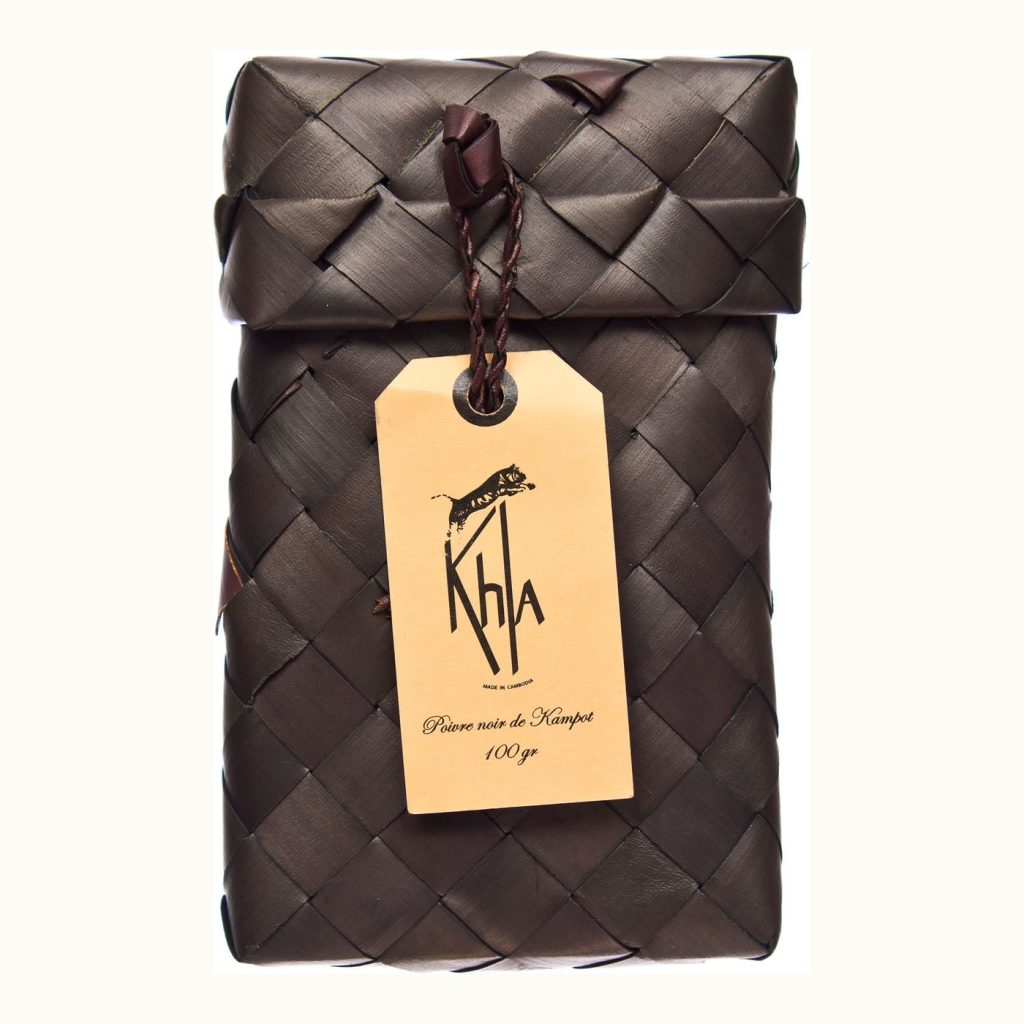
Kampot pepper, and the warning that goes with it
It is the best known Cambodian product abroad, and the first in the country to obtain a protected geographical indication, registered in Cambodia in 2010 and recognised by the European Union in 2016.
Here is the warning, and it is not widely understood: a large share of what is sold as Kampot pepper outside Cambodia never grew here. The vine travels well, and the same Piper nigrum plants are cultivated across the Thai border. So it is not an inferior variety, it is the right variety from the wrong place. The PGI seal settles it, and it can be checked on the packaging before you pay.
Four colours, four different products: the black picked green and sun dried, the everyday one; the red left to ripen on the vine, sweeter and rarer; the white soaked and hulled, clean and direct; the green picked young, the one used in Kep crab. If you only take one, take the black. If you take two, add the red.
Salt and fleur de sel from Kampot
Less thought of, and wrongly so. Most of Cambodia’s salt comes from the flats you drive past between Kampot and Kep. Fleur de sel is the thin crust lifted by hand from the surface on the calmest mornings, before the coarse salt crystallises underneath. It crunches then dissolves, and belongs only as a finishing touch.
It makes an excellent gift for anyone who cooks: cheap, light, and impossible to confuse with what a supermarket sells.
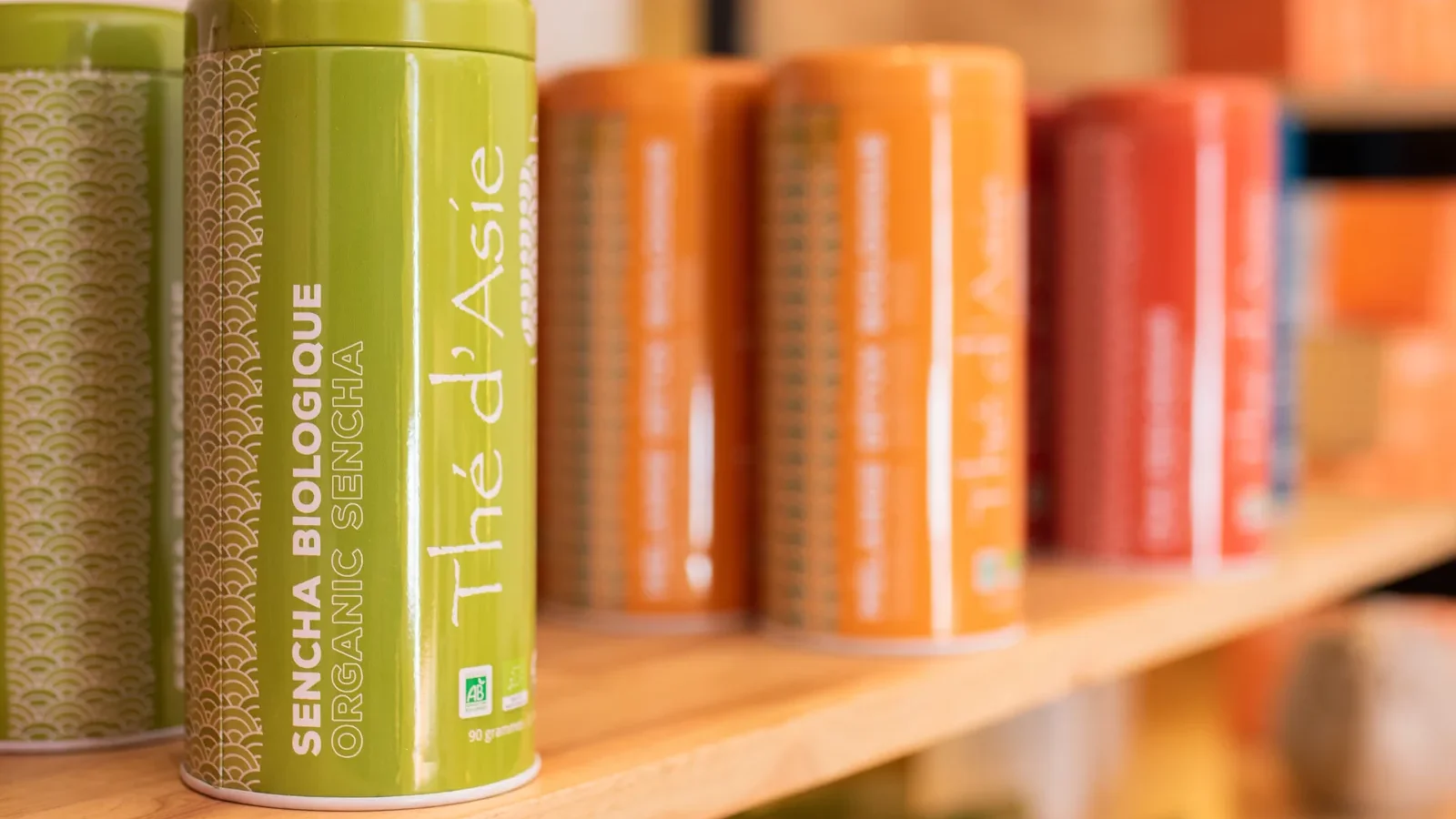
Teas and infusions
Cambodia is not a major tea country, and that should be said plainly. What happens here is blending and packing, from leaf grown in China and Sri Lanka. The Angkor green, lifted with ginger and lemongrass, is the only one in our range designed on site, and it is the one that genuinely tastes of the trip.
Caffeine free infusions, hibiscus or root blends, travel very well and are drunk iced, which will mean something to anyone who has spent a March here.
See the teas and the infusions
The krama, and everyday objects
The krama, the checked scarf worn everywhere in the country, is the Cambodian object par excellence: it works as a scarf, a towel, a bag, a sun shield. It weighs nothing and it actually gets used.
In the same register, basketwork, baskets and woven palm leaf boxes. Our pepper boxes are made of it, which solves two problems at once: the packaging is itself the souvenir.
What fits hand luggage, and what does not
This comes up constantly, so here are the markers. Dry spices and teas raise no issue in the cabin. The 50 and 100 gram palm leaf boxes are flat and light, and they are the formats travellers take most. Tubes stand up and stack in a cupboard afterwards.
What does cause trouble is liquid over 100 millilitres, so syrups and spirits, which must go in the hold. Filled grinders are solid but heavy: for the same weight, a palm leaf box holds far more pepper.
One piece of common sense: buy on the day you walk past the shop, not the night before the flight. The best formats sell out first, particularly red pepper, whose harvest is small.
Where to buy, city by city
We have three shops, and they do not stock exactly the same things. Each has its own detailed article.
Siem Reap, in Kandal Village behind the Old Market: the travellers’ shop, the one that keeps the full range of gift formats.
Phnom Penh: the shop and the packing workshop are in the same place, and courier delivery covers the city.
Kampot: closest to the plantations and the salt flats, the first to receive the new harvest.
And if you would rather compare before going anywhere, the where to buy page gathers the three addresses, opening hours and delivery areas.
Planning your shopping before you leave
One last point, for anyone reading this from home. Pepper and salt keep for years as long as they stay closed, dry and out of the light. So there is no reason to leave it to the last day, and plenty of reasons not to.
If you come between February and May you will land in the middle of the pepper harvest, and the plantations around Phnom Voar can be visited. That is the period when red pepper is available in every format, which is not true for the rest of the year.