
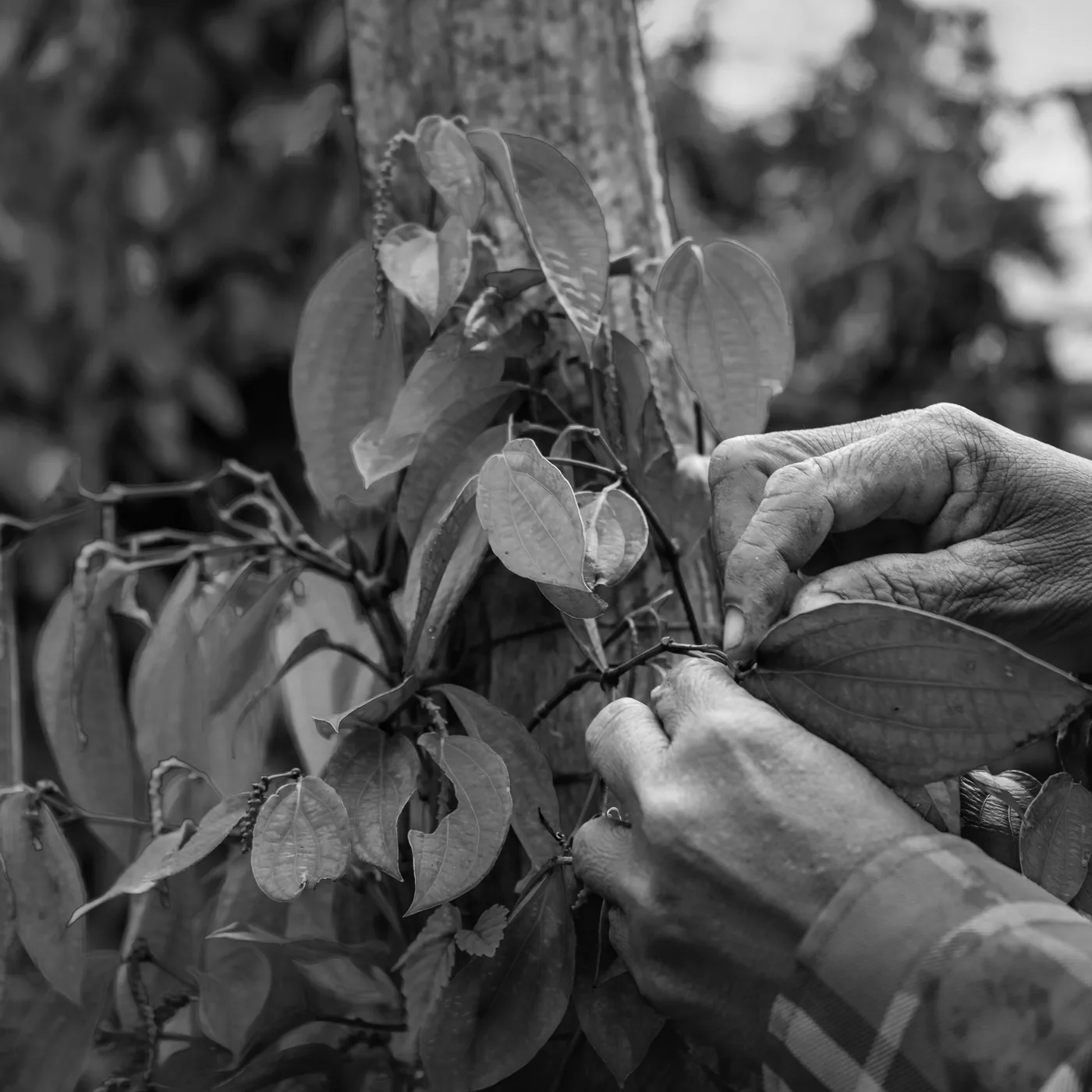
You are in Kampot. Which means you are already inside the PGI area, the one that gives the pepper its name and the only one entitled to use it. This is the one place in the world where buying Kampot pepper is not a question of trust but a question of how far you want to drive.
Why this patch of land and no other
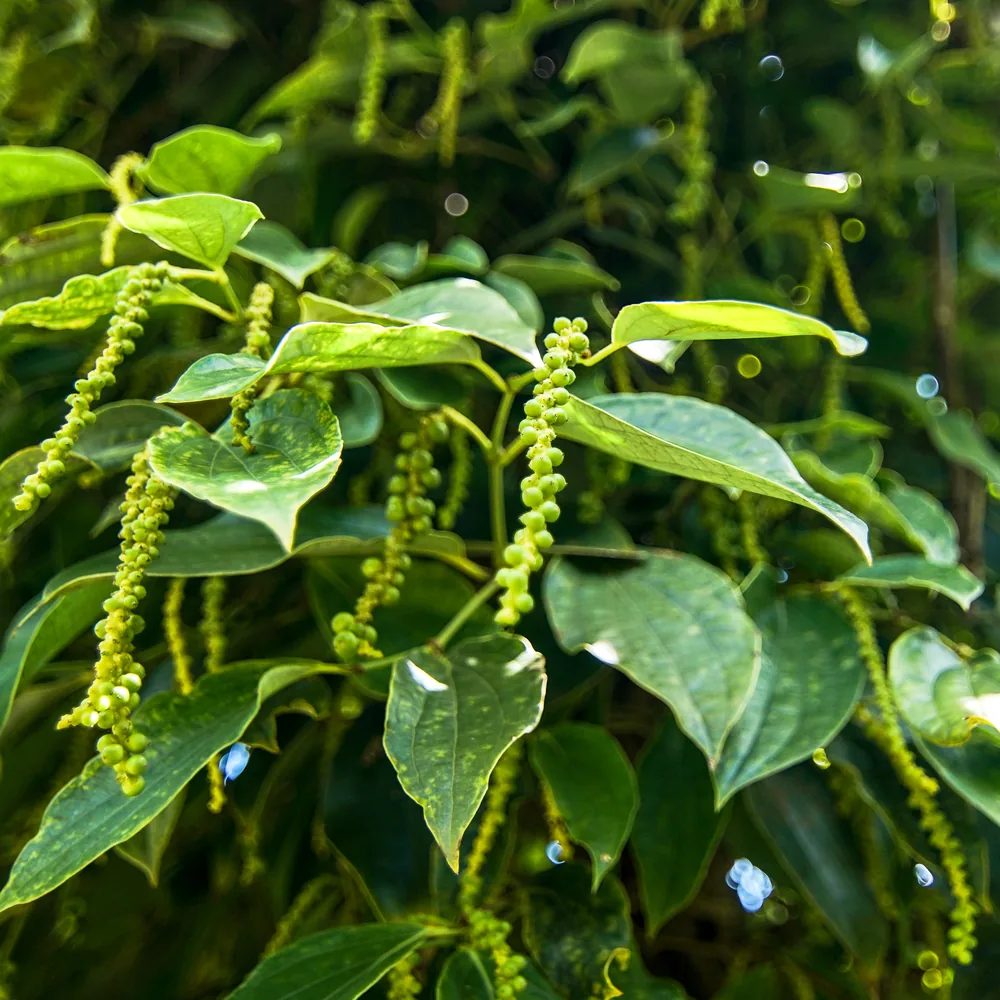
The PGI area covers Kampot province and neighbouring Kep, wedged between the Bokor massif and the Gulf of Thailand. The soil is a quartz rich weathered sandstone, the sea softens the climate, and the gap between night and day temperatures stays narrow. That combination, not the variety on its own, is what gives the pepper its length and its menthol edge.
It is also why pepper from the same stock, grown a hundred kilometres away or across a border, is not the same product, even when it is good.
Cultivation here is old, traceable to the thirteenth century, and it very nearly disappeared. The plantations were destroyed under the Khmer Rouge and it took until the nineteen nineties for a few families to bring them back. The geographical indication obtained in 2010, then European recognition in 2016, are the outcome of that recovery.
When to come
The harvest runs from February to May, and the fully ripe red berries are picked during that time, berry by berry. That is when the plantations are in full swing, when you see pickers in the rows and the drying floors covered.
The rest of the year the vines stay green and visits continue. The dry season, November to March, is still the easiest time to move around the countryside, as the tracks leading to the farms get difficult after the rains.
Pepper, but salt too
People forget that Kampot also produces salt, in the pans between the town and the sea. The fleur de sel skimmed off the surface of the basins is fine and remarkably mild, and it obviously goes rather well with the pepper next door.
If you were only taking two things home from Kampot, it would be those.
Where to buy locally
Three ways, depending on how much time you have.
Go to the plantation
Most farms in the area welcome visitors, explain the growing and the sorting, let you taste the colours side by side, and sell on site. It is the best way to understand why red costs more than black. Allow half a day including the drive.
Buy in town
Kampot town concentrates the farm shops and the delicatessens. Quicker, less immersive, and prices are comparable.
At the market
Cheaper, with no traceability. Inside the PGI area the risk is lower than elsewhere, but the PGI logo on the packaging remains the only marker you can check.
Our Kampot peppers
Sleeping among the vines
KHLA Lodge has five rooms in the middle of the pepper vines, by the river, about ten kilometres out of Kampot. It is quiet, the pool looks out over the countryside, and you can rent a kayak or a bike. For anyone wanting to see the harvest, staying out here saves the back and forth.
The access track is dirt for the last few kilometres. Bring the right vehicle, or ask for the transfer.
What to see in and around Kampot
Kampot is a small riverside town, and that is precisely its appeal: you can walk it end to end, the colonial architecture is still standing, and the pace has nothing to do with Phnom Penh. Sunset over the river, from the quays or from a boat, is what most visitors remember.
Two things are worth the trip for anyone interested in what we sell. The salt flats, which you pass for kilometres along the road to Kep, striking between January and May when the pans are being worked. And the pepper plantations around Phnom Voar, which can be visited during the harvest, from February to May depending on the year.
One caution: we do not organise visits to the salt pans, and a working salt pan is a workplace. Ask locally before walking onto one.
Kep, some thirty kilometres away, is worth the detour for its crab market, where crab is fried with Kampot green pepper a few metres from where it was caught. It is probably the best demonstration of what that pepper does.
For the broader question of what deserves space in the suitcase, our guide on what to bring back from Cambodia covers the ground.
Practical tips in Kampot
Come between February and May if you can. That is the harvest, the plantations are working, and it is the only period when red pepper is available in every format.
Buy here rather than elsewhere if your route allows it. Our Kampot shop is the closest to the plantations and the flats, it receives the new harvest first and turns over the large formats fastest.
And take the salt, not only the pepper. The fleur de sel comes from the pans you have just driven past, it costs little, it weighs little, and it is the souvenir people forget to buy.
Frequently asked questions
Can you visit a pepper plantation in Kampot?
Yes, most farms in the area welcome visitors all year, with tastings and sales on site. The most interesting period is the harvest, February to May depending on the year.
Is pepper cheaper in Kampot than elsewhere in Cambodia?
A little, sometimes, but the gap is small. The real advantage of buying at the source is not the price, it is knowing exactly where what you are carrying home came from.
What is the difference between black, red, white and green pepper?
Harvest timing and processing. Black is picked green then dried, red at full ripeness, white is a ripe berry stripped of its skin, green is picked very early and dried quickly. Same plant, four products.
How long does it take from Phnom Penh?
Kampot is south, on the coast, and is an easy day from Phnom Penh. From Siem Reap it is the other end of the country, one for an itinerary rather than a day trip.